24 May 2026 · Payal Chetwani
What 150+ Restaurant Shoots Taught Us About Food Photography in Ahmedabad
After orchestrating over 150 restaurant photoshoots, I've learned that truly captivating food photography in Ahmedabad isn't just about expensive gear; it's a symphony of light, timing, and meticulous styling. From mastering the delicate balance of golden hour to knowing which plates make a dish sing on Zomato, these are the hard-won lessons that define P2V Labs' approach to transforming culinary art into compelling visual stories.
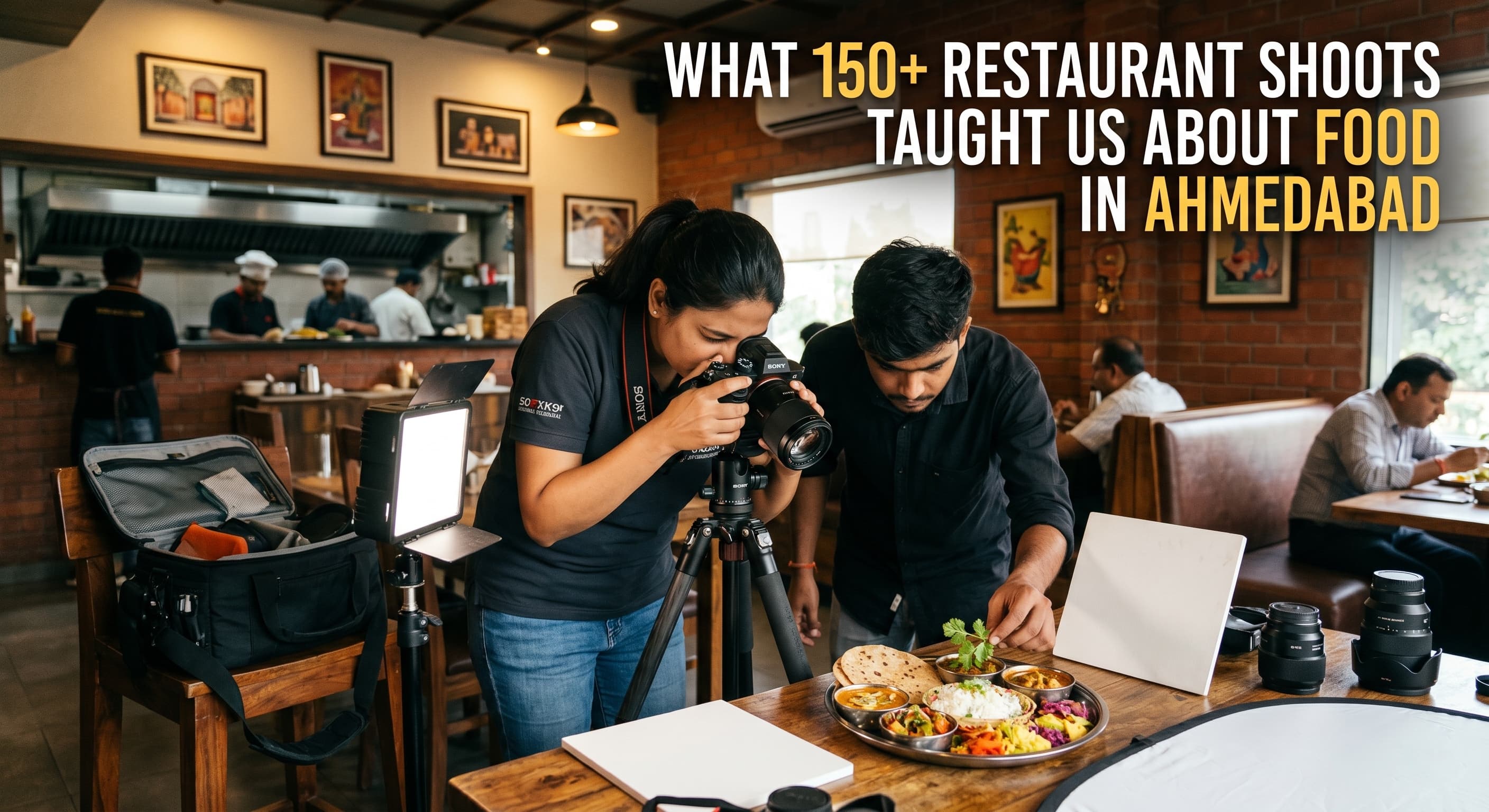
As a director and cinematographer, I’ve had the privilege of capturing the soul of Ahmedabad’s diverse culinary landscape more than 150 times. Each shoot, from bustling street food joints to high-end dining experiences, has been a masterclass in perception, technique, and the subtle art of storytelling through a lens. It's not just about taking pictures; it's about translating aroma, texture, and taste into a visual language that makes you want to reach through the screen.
The Invisible Ingredient: Mastering Light's Language
Light is the painter’s brush in food photography. It dictates mood, reveals texture, and can make or break a dish’s appeal. My journey with P2V Labs has been a continuous exploration of how to harness it, especially in the often-unpredictable environments of active restaurants.
I remember one particularly challenging shoot for a new fusion cafe in the heart of Ahmedabad. The space was beautiful, but the natural light was minimal and mixed with inconsistent artificial sources. Instead of fighting it, we leaned into it. We used large diffusion panels to soften the harsh overhead lights and strategically placed small LED panels with a warm gel to mimic natural window light, bouncing it off white cards to gently sculpt the food. The goal was to create an inviting, soft glow that highlighted the delicate plating of their signature dishes, rather than overpowering them.
Often, it’s not about having the most expensive strobes, but understanding how light interacts with surfaces. A perfectly diffused light can make a crispy dosa glisten, or reveal the intricate layers of a traditional Gujarati thali. Conversely, harsh, direct light can flatten a dish, creating unappealing shadows and reflections. My approach is always to find the light, then shape it. Whether it's chasing the last rays of afternoon sun or meticulously setting up a controlled studio environment within a busy kitchen, the quality of light is paramount for truly engaging food photography Ahmedabad.
Timing is Everything: The Dance of Golden Hour and High Noon
Every photographer dreams of shooting during the 'golden hour' – that magical window just after sunrise or before sunset when the light is soft, warm, and utterly flattering. For food, it's divine. It adds a natural glow, making ingredients pop with a rich, inviting hue. We’ve captured stunning shots of outdoor cafes bathed in this light, creating an almost cinematic quality.
But the reality of restaurant photography is that most shoots happen during operational hours, often in the middle of the day. Noon light, with its high contrast and harshness, can be a formidable opponent. This is where technical skill and quick decision-making become crucial. For a busy lunch service, for example, we might only have a few minutes with a freshly plated pizza before the cheese cools or the crust loses its perfect texture. My focus shifts to speed and efficiency.
We often carry a range of diffusers and reflectors, not just to soften harsh sunlight, but to fill in shadows and create a more balanced exposure. For a vibrant dhokla, which thrives on soft, even light to showcase its airy texture, I’d aim for a shaded spot or use a large overhead diffuser. For a bubbling sizzler, the steam is part of the story, and timing the shot as it’s brought to the table is key. It’s about being prepared for any lighting condition and knowing how to adapt on the fly to capture that fleeting moment of perfection before a dish loses its peak appeal.
Beyond the Plate: Why Styling Matters More Than Megapixels
This is perhaps the most profound lesson from our 150+ shoots: a camera, no matter how advanced, is merely a tool. The real magic happens in the styling. You can have the latest mirrorless system, but if the food isn’t styled well, the shot will fall flat. This is where the editorial, restrained aesthetic of P2V Labs truly shines, reminiscent of the thoughtful compositions you see from brands like Loewe or A24.
Styling starts long before the camera even comes out of its bag. It's about selecting the right plate – not too large, not too small, with a texture and color that complements the dish without distracting from it. It's about understanding negative space, and how a seemingly empty part of the frame can draw attention to the main subject. We meticulously consider every prop: the fold of a napkin, the angle of a fork, the subtle scattering of fresh herbs. Often, we'll bring our own curated collection of ceramics, linen, and cutlery to ensure consistency with our desired aesthetic.
Then there are the "condiments." While a restaurant might automatically serve a dish with a plastic squeeze bottle of ketchup, our job is to elevate that. Perhaps a small ramekin of house-made chutney, a drizzle of olive oil, or a sprinkle of chili flakes, artfully placed just outside the main focus. What to keep out of frame is just as important as what to include – branded soda bottles, worn menus, or cluttered backgrounds are usually a no-go. Every element in the frame must contribute to the story and the overall appeal of the restaurant photography.
“Food photography isn't just about showing what a dish looks like; it's about evoking a memory, a craving, an experience. It's a silent invitation to taste.”
The Zomato Algorithm & The Wide-Tight Ratio That Wins
In today's digital landscape, a restaurant's visual presence on platforms like Zomato and Swiggy is as crucial as its menu. But what kind of images truly perform well? My experience has shown that a strategic mix of wide and tight shots is key to capturing attention and driving orders. This isn't just about aesthetics; it's about understanding consumer psychology and platform algorithms.
Wide shots provide context. They show the entire dish, often with a hint of the restaurant's ambiance, or how it's presented on the table with accompanying elements. For a grand Gujarati thali, a wide shot is essential to convey the sheer variety and abundance of the meal. These shots work wonders for initial browsing, giving potential customers a sense of the overall offering and presentation. They help set the stage, drawing viewers in with an impression of the dining experience.
Tight shots, on the other hand, are the craving generators. They zoom in on the textures, the glistening sauces, the perfectly cooked ingredients. A tight shot of a crispy dosa with a dollop of chutney, or the melted cheese stretching on a hot pizza slice, can instantly trigger hunger. These are the Zomato photos that make people pause, drool, and click "order now." They highlight the delicious details that might be lost in a wider frame, providing an intimate, mouth-watering perspective.
At P2V Labs, when we plan a shoot, we consciously aim for this wide-to-tight ratio. We ensure that for every hero dish, there’s a contextual shot that sets the scene and a detailed close-up that ignites desire. This dual approach ensures maximum impact across all digital touchpoints, from social media reels to delivery app listings.
From Kitchen to Canvas: Crafting Visual Systems for Ahmedabad's Flavors
Having witnessed the evolution of food photography in Ahmedabad firsthand, I understand that a single great photo is just the beginning. The real power lies in creating a cohesive visual system that tells a consistent brand story across all platforms. Whether it's the intricate spices of a local curry, the fresh zest of a continental salad, or the comforting warmth of a classic Gujarati snack, each dish has a narrative.
At P2V Labs, we don't just take pictures; we craft visual ecosystems. Our team, including Vrithik Prince, Payal Chetwani, and myself, collaborates closely with restaurants to understand their unique identity. This leads to not just stunning food and product photography, but also engaging social reels and brand films that resonate deeply with their audience. Our dedication to this holistic approach has resulted in over 5 million views across client reels and a 90%+ plan renewal rate, testament to the long-term value we deliver.
We pride ourselves on our editorial aesthetic – sophisticated, understated, and always focused on the authenticity of the food. Our services range from targeted food shoots starting at ₹8,000, to comprehensive brand films at ₹35,000, and ongoing monthly plans from ₹20,000, ensuring a steady stream of high-quality visual content. Our goal is to be more than just a service provider; we aim to be a visual partner, helping Ahmedabad's culinary businesses thrive. For our existing partners, our client portal at clients.p2vlabs.in provides seamless access to all their visual assets.
Every plate, every ingredient, every flicker of light tells a story. After 150+ restaurant shoots, my greatest lesson is that our role is to simply listen to that story and translate it with honesty and artistry. The journey continues, one delicious frame at a time.